Monday, July 12, 2010

Ruby Wandering Rocks # 12

In Greek mythology the Wandering Rocks were a group of rocks, between which the sea was mercilessly violent. In the Odyssey of Homer, the sorceress Circe tells Odysseus of the "Wandering Rocks" or "Roving Rocks" that have only been successfully passed by the Argo when he was homeward bound. These rocks smash ships and the remaining timbers are scattered by the sea or destroyed by flames. The rocks lie on one of two potential routes to Ithaca; the alternative, which is taken by Odysseus, leads to Scylla and Charybdis.(Previous chapter) Furthermore, in the Odyssey of Homer, it was Hera, for her love of Jason, who sped the Argo through the Wandering Rocks safely.

This chapter of James Joyce's Ulysses is said to be an interlude between to two main parts of the novel. An Odyssey within the Odyssey.

Briefly; about 20 characters are walking around in Dublin, also using the tram, now and then. Seemingly occupied doing ordinary things, but mostly with a hidden agendas. Boyle planning to seduce Bloom's wife, the sympathetic Father Conmee (con me?) traveling far to exchange secret information, the jovial Buck Mulligan backstabbing his friend young Stephen Dedalous, a one legged sailor begging "For England", Dedalous sr. selling his son's books for booze and horses, while his daughters are starving, e.t.c.

All characters end up watching the Vice-regent on his way to open a great humanitarian event. They all react individually watching the cortege.Friday Gunnar, Serina and I had the pleasure once more attending a concert with the unique Dubliners. A group named after a James Joyce novel, still singing their heart and soul out for "Dear,Old Ireland". We sung, clapped and danced for an hour, we could hardly walk or talk afterward.

I'll let the Dubliners be a symbol of the positive strength of Wandering Rocks. For almost five decades have done so much to spread knowledge about Ireland, her troubles, sufferings, but also of her beauty and joy. They were at the Roots Festival ten years ago, and promised to come back in yet another decade.

I'll be there to greet and honor them.

Photos for this post by Gunnar, Serina and Felsiol

Originated by MaryT, check hers for today

Friday, July 09, 2010

Walking on promises #1


2 Chor. 9:
8
And God is able to make all grace abound to you, so that in all things at all times, having all that you need, you will abound in every good work.

Wednesday, July 07, 2010

Scylla and Charybdis in Sepia #11

Shakespeare in love?


Scylla and Charybdis are two sea monsters of Greek mythology noted by Homer; later Greek tradition sited them on opposite sides of the Strait of Messina between Sicily and mainland Magna Graecia (southern Italy). They were said to be located close enough to each other that they posed an inescapable threat to passing sailors; avoiding Charybdis meant passing too closely to Scylla and vice versa.


In this chapter young Stephen Dedalous and his friends are discussing literature in general and William Shakespeare in particular, in what was also James Joyce's favorite hang out; The National Library of Ireland.
Themes from Hamlet and The Merchant of Venice are analyzed with great skill.
Shakespeare seems to have been an author highly respected by James Joyce. In Hades he let Leopold Bloom say, "He was a good man,just like Shakespeare, had a friendly word to everyone." Both Stephen Dedalous and Leopold Bloom (Images of Joyce as a young and a grown man) did not have so much positive to say about contemporary authors, they were either too romantic or out of time national.

A point in the discussion is William Shakespeare's long absence from his wife Ann, born Hath-a-way, who in Shakespeare's will only was given his "next best bed". Penelope is her pendant, staying home, waiting for the wayward Odysseus.
How deep was their love, really?
The biography of James Joyce also reveals, that the author had long and mysterious trips away from his Nora and the rest of the family.
I'll let this be the theme with a question hanging in the air, from my outtake from the Scylla and Charybdis chapter.

Teach Mary is the host of Sepia Scenes,visit her.

From Jeremiah with love


I have not got the gift of preaching.
I feel humble and unworthy, when I talk about our Lord.
Those who know me, will assure you; I have got much to be humble about.
I have got a gift, though, to find a comforting word in the Bible, when I need it.
Today I found these words from Jeremiah 29, and felt it right to share them:
"11 For I know the thoughts that I think toward you, saith the LORD, thoughts of peace, and not of evil, to give you a future and a hope. 12 And ye shall call upon Me, and go, and pray unto Me, and I will hearken unto you. 13 And ye shall seek Me, and find Me, when ye shall search for Me with all your heart. "

Sunday, July 04, 2010

Ruby dripping Laestrogians # 10


The Laestrygonians (or Laestrygones, Laistrygones, Laistrygonians, Lestrygonians; Greek: Λαιστρυγόνες) are a tribe of giant cannibals from ancient Greek mythology. Odysseus, the main character of Homer's Odyssey, visited them during his journey back home to Ithaca. The giants ate many of Odysseus' men and destroyed eleven of his twelve ships by launching rocks from high cliffs. Odysseus' ship was not destroyed as it was hidden in a cove near shore. Everyone on Odysseus' ship survived.

This chapter is about the wandering Leopold Bloom trying to get himself some descent lunch at the hour from 12 to 1.
All the time he is philosophizing about Irish politics, various Christian Churches and Judaism.
Bloom is painfully obsering how lust for power is corrupting the good intentions both in politics and religion..
"In aid of funds for Mercer's hospital. The Messiah was first given for that. Yes Handel. "(James Joyce) Here: Gunnar ans Serina in the St. Mary
Church.


Bloom is analyzing the life in various social layers from the outcast whores and beggars, and their contradiction; the noble upper-class.
He chuckles at the memory about the time he sneaked in to a royal dinner at Dublin Castle and mingled with vice king and his court.
My mom is also a bit bewildered about her seven course Chinese dinner...


He's jealous of a man, Boyle, who he suspects his wife might have had a one night affair with.
This does not prevent him from keeping fantasizing about the woman Marta, who he just might like to have a more intimate relationship with ...
A man of contradictions and knife sharp observations.

He's using money to feed the seagulls, but cannot seem to find an appropriate place to have his own lunch.
Lamb at sundown, in two months; lamb chops."No fear. No brains. "(James Joyce)
He is disgusted by the over eaters as well as the poor, literally eating from the street.
Bloom would have hated this. Potato cake, shrimp salad, sausage, bacon and smoked ham.From hiker ladies last day out.
Finally he ends up in a vegetarian restaurant, very pleased and relieved.
A posh place and very up to 2010 standards. I don't think we even have a restaurant like this neither in our town nor on the island.
Fish eaters after sundown July thrid.
All the time his reflects on various sides of the theme advertising.
Some of his ideas are simply brilliant. The Leopold Bloom of 2010 would own his own firm and probably run a multi million pound business.
"Wouldn't have it of course because he didn't think of it himself first. " (James Joyce)
It has never been profitable to be ahead of ones time (read:equals).


"Heart to heart talks.

Bloo... Me? No.

Blood of the Lamb.

His slow feet walked him riverward, reading. Are you saved? All are washed in the blood of the lamb. God wants blood victim. Birth, hymen, martyr, war, foundation of a building, sacrifice, kidney burntoffering, druid's altars. Elijah is coming. Dr John Alexander Dowie, restorer of the church in Zion, is coming.

Is coming! Is coming!! Is coming!!!
All heartily welcome. "
(James Joyce)
A druid grave from with triangles of standing stones. The old St. Olavs Church and a third standing stone across the strait.Midnight shot July forth.

Originated by MaryT, check hers for today

Tuesday, June 29, 2010

Sepia Scenes. Aeolus # 9


Aeolus was a son of Hippotes who is mentioned in Odyssey book 10 as Keeper of the Winds who gives Odysseus a tightly closed bag full of the captured winds so he could sail easily home to Ithaca on the gentle West Wind. (Wikipedia) Odysseus' men were of a normal curios kind. They stole themselves to open the bag and let loose winds from every corner of the earth.The result was total confusion. They survived just accurately.
(Serina and myself opposite GPO)
IN THE HIBERNIAN METROPOLIS
Bloom and his friends arrive at the central point of Dublin's transport system, be it taxis or trams. Just outside the Genera Post Office, by the famous Nelson Column. (The GPO were the main scene of the Irish upraising in 1916, and Nelson "took a powder and he blew" helped by the IRA in 1966.)
Bloom's pendant to the terrible storms cause by opening the bag of Aeolus, takes place in a major News paper house containing three papers with same ownership just across the street. Wind may reflect on the emptiness of the journalism of the free press. Nothing much has changed for the last hundred years.
Bloom's main breadwinning task for the whole of June 16th, as an ad canvasser, is negotiating an advertisement for for Mr. Keyes (logo two crossed keys). This seemingly simple task, leads him all around the building from editors, business manager, (back then, like now business was more important than the content of the paper), to the cashier,the typographer and endless and meaningless meetings with acquaintances.
While seemingly fruitless, Leopold Bloom is all the time making sharp observations and reflections over insignificant details and important national and global issues.
(My granddad was a coachman in 1904)
EXIT BLOOM
The Aeolus chapter has a news paper like lay out . Lots of paragraphs with suitable head titles.
The editor waves Bloom off," Begone, he said. The world is before you
. Back in no time Mr. Bloom said, hurrying out." (James Joyce)

Enter
Stephen Dedalus to deliver the somewhat dubious article about mouth and foot disease, from his headmaster.
He is also being treated impolitely.


Speach by J.F. Taylor to revive Gaelic culture:
"-- Why will you jews not accept our culture, our religion and our language? You are a tribe of nomad herdsmen; we are a mighty people. You have no cities nor no wealth: our cities are hives of humanity and our galleys, trireme and quadrireme, laden with all manner merchandise furrow the waters of the known globe. You have but emerged from primitive conditions: we have a literature, a priesthood, an agelong history and a polity.

Nile.

Child, man, effigy.

By the Nilebank the babemaries kneel, cradle of bulrushes: a man supple in combat: stonehorned, stonebearded, heart of stone.

-- You pray to a local and obscure idol: our temples, majestic and mysterious, are the abodes of Isis and Osiris, of Horus and Ammon Ra. Yours serfdom, awe and humbleness: ours thunder and the seas. Israel is weak and few are her children: Egypt is an host and terrible are her arms. Vagrants and daylabourers are you called: the world trembles at our name.

A dumb belch of hunger cleft his speech. He lifted his voice above it boldly:

-- But, ladies and gentlemen, had the youthful Moses listened to and accepted that view of life, had he bowed his head and bowed his will and bowed his spirit before that arrogant admonition he would never have brought the chosen people out of their house of bondage nor followed the pillar of the cloud by day. He would never have spoken with the Eternal amid lightnings on Sinai's mountaintop nor ever have come down with the light of inspiration shining in his countenance and bearing in his arms the tables of the law, graven in the language of the outlaw.

He ceased and looked at them, enjoying silence. " (James Joyce)
And they say Joyce didn't care for Irish politics.
.Teach Mary is the host of Sepia Scenes.
Visit her!

Sunday, June 27, 2010

Ruby Tuesday in Hades #8


Hades,
the reign of the death, and also the name of the place of the dead, is the Greek parable to Irish Glasnevin Cemetery. There Leopold Bloom's attending the funeral of a friend, Dignam.
The very same person, who was introduced in the first chapter as a floating corpse near the Tower in Sandycove.


Leopold Bloom is sharing a carriage with three friends, or acquaintances, among them Simon Dedalus, father of Stephen Dedalus, who again is Leopold Bloom as a young person.
While traveling to the graveyard, they actually pass Stephen Dedalus, who is leaving the tower and his exploiting friends for good. As if this is not complicated enough, Leopold Bloom's father, who committed suicide, hurting his son and leaving the family in ruins, is introduced.
A quadruple mix of father and son relations and deep, devastating problems.

One also, slowly, get under the skin of Leopold Bloom, the outsider and bystander as he is sharing thoughts of love and pain, bewilderment and understanding. About his father he thinks,"They used to drive a stake of wood through his,(the suicide's) heart in the grave. As if it wasn't broken already."
.
"Ought to be flowers of sleep. Chinese cemeteries with giant poppies growing produce the best opium Mastiansky told me."(James Joyce)

No wonder Leopold Bloom has need for withdrawal, letting his mind wander about death, resurrection, the life within and outside the church.


"Love among the tombstones.. Romeo. Spice of pleasure. In the midst of death we are in life. Both ends meet."(James Joyce)


Originated by MaryT, check hers for today

Wednesday, June 23, 2010

POSTWAR HOUSEWIFE POETRY

My parents married in 1947.Due to five years of German occupation, there were a horrible shortage of everything.
No house had been built for five years, all materials and man power had been used to build fortresses all along the Norwegian coast. "Festung Norwegen", Fortress Norway, the occupants called our country.
My parents were lucky to let two rooms in the attic of a small cottage. Here my mother gave birth to two children, her only, in 15 months. The water had to be carried from a brook near by, and the cotton napkins were boiled on the kitchen stove.
My father worked 80 hours a week, and took mercantile education at nights (with straight A s).
Even so he took the time to take this poetic photo of my mother, hanging out laundry for dry.
It's so beautiful, love over love, makes me want to cry every time I see it.
Gunnar found the film and scanned it, I converted it with tint sepia.
.
Teach Mary is the host of Sepia Scenes.
Visit her!

Thursday, June 17, 2010

Ruby Tuesday and The Lotus Eaters #7


This is a Standing stone, marking a slate grave from the time, when the druid cult was dominant in our neighborhood. The photo was taken shortly before sundown a week ago. A burnt down church can be spotted in the background.
The standing stones are also known for being phallic symbols. Wow, our landscape are full of them.
The Ulysses also has many sexual references, some placed there by James Joyce, even more found and interpreted by students of literature.
Sexuality is what makes generations coming and going.
As long as it's not obscene or exploiting, I see nothing wrong in that.


The chapter called "Lotus Eaters" is amongst others about escapism.
Also it is about entheology; meaning what's making God to be inside a person.
This may refer to plants or substances eaten by ancient religious people in order to come close to divinity.
Our Christian Holy communion is in Bloom's world, (and in fact also in the Christian's), eating the body of Christ and drinking his blood, our mysterious way of keeping this connection with the Holy. It would have been easier, and less offensive, celebrating Christ in a more"normal" way, with prayers, even dressed in ashes and sacks. However, this is God's way of letting us know how small we are, and how powerful he is..


Leopold Bloom's in particular; in this chapter he literally is walking in a circle, never getting any of his small errands thoroughly done.
I've had those nightmares myself, feels like walking in syrup, hardly moving at all.
Thinking about it, I've been doing the sleep walk, while seemingly awake, but never seeming to get anywhere. "Life is something happening, while you're busy making other plans."


The lotus eaters of Homer gave Odysseus' men lotus petals to eat, and thus made them forget that their aim was sailing to their homeland, Ithaca.
To Leopold Bloom the lotus is a narcotic substance; a cigar is mentioned.

Bloom is a Jew, but not kosher, when it comes to eating.
In this chapter he casually enters a church, and watch from outside the congregation receiving the holy communion.His mind is swirling around, half critically, half indifferently. He has many accurate observations, but somehow he constantly avoids getting deeper engaged.
He's not superficial; he's confused, procrastinating, walking the whole circle through, many question asked, no answers given so far.


From Lotus Eaters:
"The cold smell of sacred stone called him. He trod the worn steps, pushed the swing door and entered softly by the rere.

Something going on: some sodality. Pity so empty. Nice discreet place to be next to some girl. Who is my neighbor? Jammed by the hour to slow music. That woman at midnight mass. Seventh heaven. Women knelt in the benches with crimson halters round their necks, heads bowed. A batch knelt at the altar rails. The priest went along by them, murmuring, holding the thing in his hands. He stopped at each, took out a communion, shook a drop or two (are they in water?) off it and put it neatly into her mouth. Her hat and head sank. Then the next one: a small old woman. The priest bent down to put it into her mouth, murmuring all the time. Latin. The next one. Shut your eyes and open your mouth. What? Corpus. Body. Corpse. Good idea the Latin. Stupefies them first. Hospice for the dying. They don't seem to chew it; only swallow it down. Rum idea: eating bits of a corpse why the cannibals cotton to it.

He stood aside watching their blind masks pass down the aisle, one by one, and seek their places. He approached a bench and seated himself in its corner, nursing his hat and newspaper. These pots we have to wear. We ought to have hats modeled on our heads. They were about him here and there, with heads still bowed in their crimson halters, waiting for it to melt in their stomachs. Something like those mazzoth: it's that sort of bread: unleavened shew bread. Look at them. Now I bet it makes them feel happy. Lollipop. It does. Yes, bread of angels it's called. There's a big idea behind it, kind of kingdom of God is within you feel. First communicants. Hokypoky penny a lump. Then feel all like one family party, same in the theater, all in the same swim. They do. I'm sure of that. Not so lonely. In our confraternity. Then come out a big spreeish. Let off steam. Thing is if you really believe in it. Lourdes cure, waters of oblivion, and the Knock apparition, statues bleeding. "
(James Joyce)

I find no mocking in it; just the eternal wondering, twisting and turning and triple bottoms.
I guess, one finds, what one is looking for most of the time.
"Search and you shall find," Jesus said.

Originated by MaryT, check hers for today

Wednesday, June 16, 2010

Bloomsday & Calypso #6


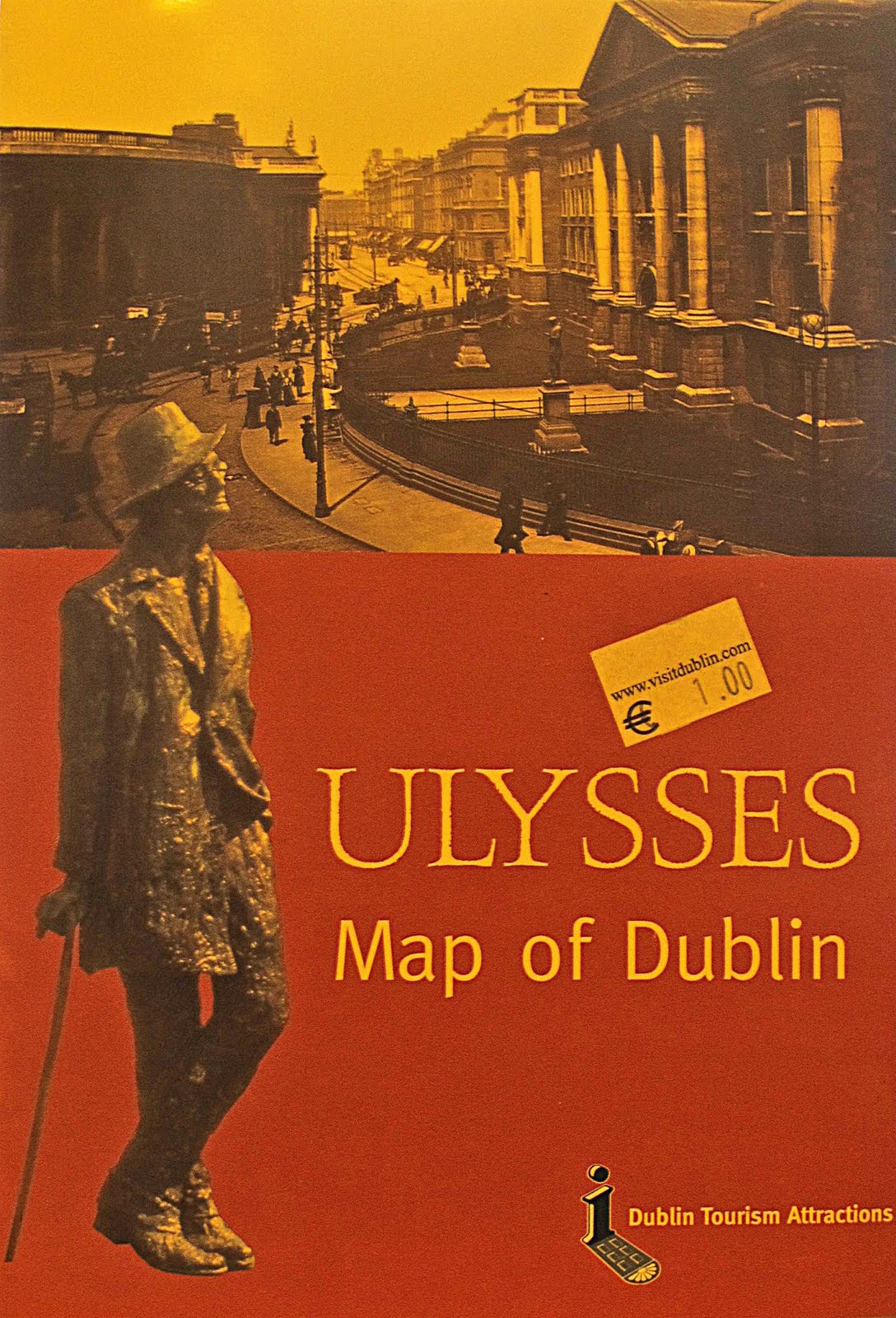
16th of June 1904, the day author James Joyce realized he was in love with Nora Barnacle, is the specific day the novel Ulysses is revolving about.
For years it has been celebrated as Bloomsday in Ireland.

But, hey, that's today. Happy Bloomsday everyone!
A whole nation celebrating a novel, where else can that happen than on the isle named Erin.
The rest of the world still shrugging their shoulders and calling the novel difficult or advanced.

Enter: Leopold Bloom/aka Stephen Daedalus/aka Ahasverus/aka Odysseus/aka James Joyce.
Once one has accepted this; the necessity of any Irishman to talk metaphorically, not to get executed as a rebel.
Twisting and turning words and sentences in and out of context, till everything seems to have a triple bottom became Joyce's specialty and the master degree of hundreds of literature students.
The newborn science of psychology, the Darwinism, the philosophers on the continent going in different directions, the streams of contradictions in music, painting, the revolution of natural, physics and chemistry sciences, even fashion changed dramatically. The Church and the British regime were the conservative and often threatening elements in this melting pot of a new world emerging.
Midst in this James Joyce, aka Leopold Bloom, is falling head over heals in love. He and his Nora, aka Molly should stay together for the rest of their lives.
This, and any Irishman's deep double bound love/hate for his homeland,
is skillfully woven into this dinosaur novel.
The great lines painted with a thick brush and beautiful or harsh details carefully engraved with a silver needle.


Calypso,
the name of a sea goddess in Greek mythology, is the title of chapter II.
According to Homer Calypso held Odysseus captured for seven years, before Athene managed to free him and send him home to his beloved Penelope.
To Leopold Bloom this morning is a contradiction of feeding the cat, making breakfast, thinking politics, (the home-rule sun is going up in north WEST behind the shut down Irish Parliament, now Bank of Ireland), waiting upon his beloved Molly, going to the outhouse, listen to the church bells and discussing transmigration of souls.
I'd like to share the cat feeding sequence with you.


"Cup of tea soon. Good. Mouth dry. The cat walked stiffly round a leg of the table with tail on high.

-- Mkgnao!

-- O, there you are, Mr Bloom said, turning from the fire.

The cat mewed in answer and stalked again stiffly round a leg of the table, mewing. Just how she stalks over my writing-table. Prr. Scratch my head. Prr.

Mr Bloom watched curiously, kindly, the lithe black form. Clean to see: the gloss of her sleek hide, the white button under the butt of her tail, the green flashing eyes. He bent down to her, his hands on his knees.

-- Milk for the pussens, he said.

-- Mrkgnao! the cat cried.

They call them stupid. They understand what we say better than we understand them. She understands all she wants to. Vindictive too. Wonder what I look like to her. Height of a tower? No, she can jump me.

-- Afraid of the chickens she is, he said mockingly. Afraid of the chookchooks. I never saw such a stupid pussens as the pussens.

Cruel. Her nature. Curious mice never squeal. Seem to like it.

-- Mrkrgnao! the cat said loudly.

She blinked up out of her avid shameclosing eyes, mewing plaintively and long, showing him her milkwhite teeth. He watched the dark eyeslits narrowing with greed till her eyes were green stones. Then he went to the dresser, took the jug Hanlon's milkman had just filled for him, poured warmbubbled milk on a saucer and set it slowly on the floor.

-- Gurrhr! she cried, running to lap.

He watched the bristles shining wirily in the weak light as she tipped three times and licked lightly. Wonder is it true if you clip them they can't mouse after. Why? They shine in the dark, perhaps, the tips. Or kind of feelers in the dark, perhaps.

He listened to her licking lap."
James Joyce

Monday, June 14, 2010

My ruby summer #5

My ruby summer has been great so far. Enjoying the company of Serina and Gunnar.
Lazy days at the beach, reading Ulysses and taking sunbaths.
I even managed to fall asleep for an hour, and got a ruby back side.
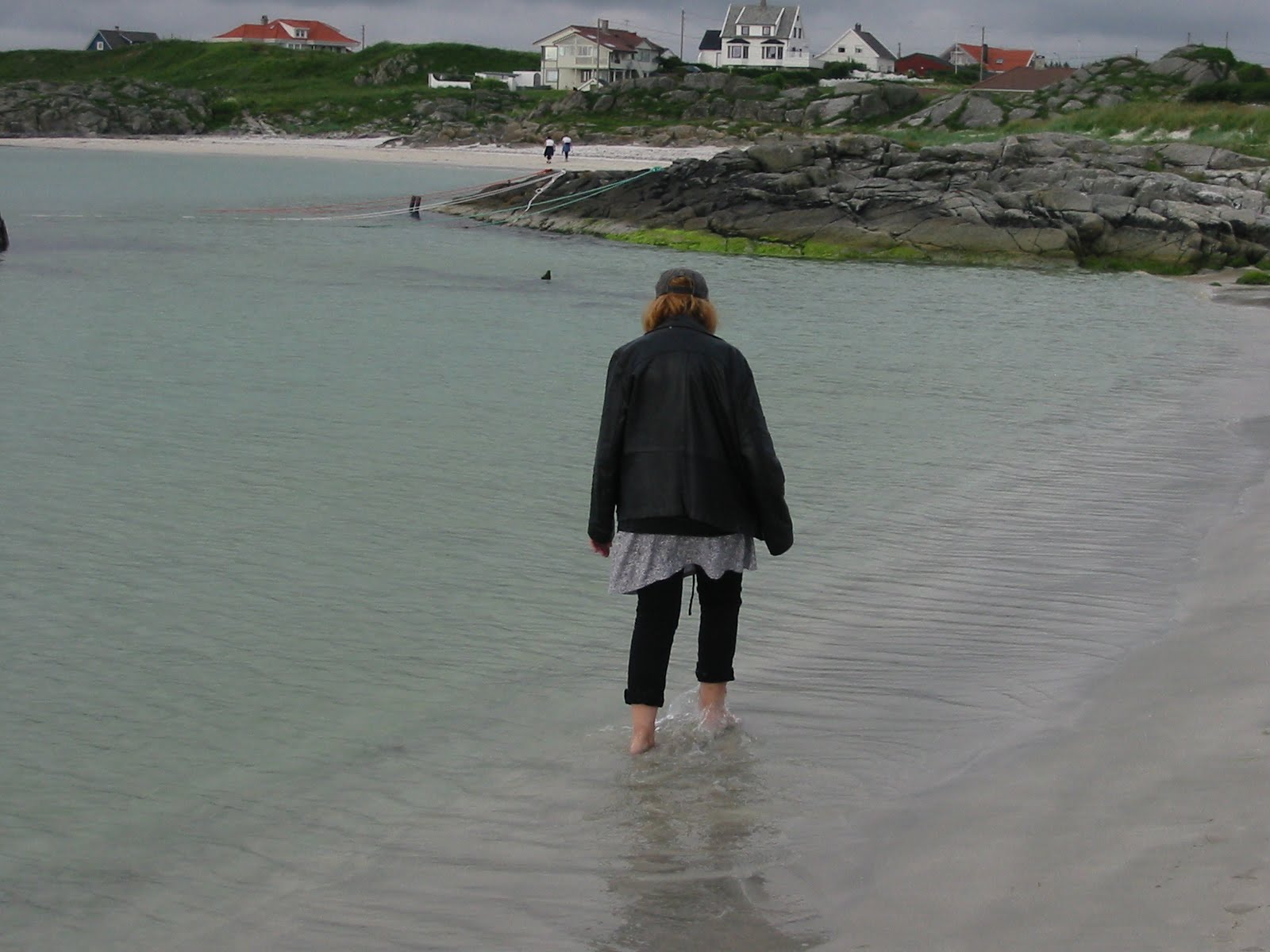
The water is barely 50 Fahrenheit degrees, so I'm only dipping my toes.
We saw several people - and dogs taking a plunge into the water.
Real vikings.

Originated by MaryT, check hers for today


Sunday, June 13, 2010

Proteus, god of the sea.#4


Leora challenged me, and I think Raven in her polite and cautious way tried to warn me, but stubborn headed me could not resist. This Sunday have been the day of Proteus in many variations. My brother Kel, Gunnar and Serina have all been engaged and thrilled by the opening sequence of the Proteus chapter. We have read Homer, Wittgenstein, about Jugend art, searched through glossaries for the best translation of modality(there is none,the Norwegian word is modalitet), we have twisted and turned the sentences till I finally ended up in the bath listening to a skilled Irish actor reading the Ulysses.
Couldn't dream of a better way to spend a sunny summer's day.
All this and football too..

PROTEUS, GOD OF THE SEA.
Menelaus who fought Proteus and won the answer, the way back to Ithacha .


"INELUCTABLE MODALITY OF THE VISIBLE: AT LEAST THAT, IF NO MORE, thought through my eyes.

Signatures of all things I am here to read, seaspawn and seawrack, the nearing tide, that rusty boot.
Snotgreen, bluesilver, rust: coloured signs. Limits of the diaphane. But he adds: in bodies. Then he was aware of them bodies before of them coloured. How? By knocking his sconce against them, sure. Go easy. Bald he was and a millionaire, maestro di color che sanno.(Dante on Aristotle: "the master of the men who know"). Limit of the diaphane in. Why in? Diaphane, adiaphane. If you can put your five fingers through it, it is a gate, if not a door. Shut your eyes and see.


Stephen closed his eyes to hear his boots crush crackling wrack and shells.

You are walking through it howsomever. I am, a stride at a time. A very short space of time through very short times of space. Five, six: the nacheinander. Exactly: and that is the ineluctable modality of the audible. Open your eyes. No. Jesus! If I fell over a cliff that beetles o'er his base, fell through the nebeneinander ineluctably.
I am getting on nicely in the dark. My ash sword hangs at my side. Tap with it: they do. My two feet in his boots are at the end of his legs, nebeneinander. Sounds solid: made by the mallet of Los Demiurgos.

Am I walking into eternity along Sandymount strand? Crush, crack, crick, crick. Wild sea money. Dominie Deasy kens them a'.

Won't you come to Sandymount,
Madeline the mare?


Rhythm begins, you see. I hear. A catalectic tetrameter of iambs marching. No, agallop: deline the mare.

Open your eyes now. I will. One moment. Has all vanished since? If I open and am for ever in the black adiaphane. Basta! I will see if I can see.


See now. There all the time without you: and ever shall be, world without end."
Limit of the diaphane in. Why in? Diaphane, adiaphane. If you can put your five fingers through it, it is a gate, if not a door. Shut your eyes and see.


Stephen closed his eyes to hear his boots crush crackling wrack and shells. You are walking through it howsomever. I am, a stride at a time. A very short space of time through very short times of space. Five, six: the nacheinander. Exactly: and that is the ineluctable modality of the audible. Open your eyes. No. Jesus! If I fell over a cliff that beetles o'er his base, fell through the nebeneinander ineluctably. I am getting on nicely in the dark. My ash sword hangs at my side. Tap with it: they do. My two feet in his boots are at the end of his legs, nebeneinander. Sounds solid: made by the mallet of Los Demiurgos. Am I walking into eternity along Sandymount strand? Crush, crack, crick, crick. Wild sea money. Dominie Deasy kens them a'.

Won't you come to Sandymount,
Madeline the mare?


Rhythm begins, you see. I hear. A catalectic tetrameter of iambs marching. No, agallop: deline the mare.

Open your eyes now. I will. One moment. Has all vanished since? If I open and am for ever in the black adiaphane. Basta! I will see if I can see.

See now. There all the time without you: and ever shall be, world without end."
James Joyce (Ulysses)

The modality of the sea,
The rhythm of the sea,
The ever changing,
The life giving,
The life ending,
The riddle to be individually solved.
A blogger , Kurt Lindblom says,"Anyway, the phrase basically means the inescapability form of the visible. Vision is a fundamental component of existence. And Stephen is musing over the exact nature of reality--what is real? How can he know what is real? "

I don't agree. Anyone who has been walking along the shore knows for sure that the sea, the waves; the form of the shore, is always changing. Flood, tide, storm, landslides pollution; the ocean is as vulnerable as it is strong. A blind man knows a lot of forms, shapes by using his other senses, also described by Stephen. His ears, his skin, his balance, smell, texture, are all things telling about the real world surrounding him. Any archeologist can tell a lot about what may be hidden under the earth, because of history, forms, shapes of the scenery and the culture he is about to examine.
We can indeed know about things we do not see.
Hebrews 11
1Now faith is the substance of things hoped for, the evidence of things not seen.

Most of the pictures made by Gunnar Jacobsen.
The pictures were added mainly to entertain, but also that you may take time to reflect on the text.